

Large conferences succeed or fail based on operational execution. When thousands of attendees arrive at a venue, every component must function perfectly. A single broken registration scanner, a delayed caterer, or a confusing floor plan can immediately disrupt an entire corporate schedule.
Event logistics is the systematic process of managing these moving pieces. It includes venue coordination, technology deployment, vendor management, and financial tracking. Managing these operations for a massive audience requires moving past basic checklists. This guide provides an advanced blueprint to help you organize a highly efficient, predictable, and successful large-scale conference.
Phase 1: Pre-Conference Infrastructure and Financial Planning
Strategic Budget Formulation
Financial control determines the boundaries of your conference. To manage expenses accurately, separate your budget into direct operational categories: venue rental, audio-visual technology, staff payroll, catering, and marketing.
Unplanned variables occur in every large event. Suppliers change rates, and registration numbers shift. To absorb these unexpected costs without going into deficit, allocate a fixed 15% emergency contingency fund inside your main ledger. Track every expense line item daily to protect your financial return.
Demographic-Driven Venue Selection
Your venue must match the practical requirements of your audience. Analyze your expected attendee data to verify that the location is accessible by major transport routes and offers sufficient physical capacity.
Confirm that the facility fully complies with accessibility laws. Check for physical ramps, wide doorways, functional elevators, and clear entry paths. Selecting an accommodating venue ensures all attendees enter and navigate the conference safely.
To-Scale Site Mapping
Do not rely on visual estimates when planning your floor layout. Secure precise, to-scale architectural maps of the venue to plan your structural zones.
Mark exact locations for the registration desks, exhibition booths, dining areas, and main presentation stages. Leave wide corridors between high-traffic sections to prevent dangerous bottlenecks. Clear pathways keep thousands of people moving efficiently throughout the day.
Phase 2: Technical, Vendor, and Asset Management
Vendor Contract Enforcement
Suppliers control critical parts of your conference infrastructure. To prevent delays or unexpected budget changes, sign clear legal service agreements with every partner.
Your contracts must specify exact arrival times, setup deadlines, and financial penalties for non-performance. Collect precise technical needs from your catering, rental, and production suppliers before the event. Knowing their exact power and spatial requirements keeps the main venue floor safe and organized.
Hardware and Software Integration
Slow registration lines create a poor first impression for attendees. Implement a mobile ticketing platform to scan registration badges at the venue entrance. This technology speeds up entry and provides real-time attendance numbers.
Large crowds require strong internet access. Verify that the venue network infrastructure can handle high-density Wi-Fi usage. Test the connection speed inside every presentation room to make sure live-streams and digital presentations run without interruption.
Phase 3: On-Site Execution and Team Coordination
The Master Timeline
Large conferences depend on strict timing to remain organized. Build an hour-by-hour operational schedule that coordinates every component of the event day.
This central document must list the exact start and end times for speaker presentations, meal services, sponsor exhibitions, and room transitions. Distribute this timeline to all vendors, speakers, and staff members before the doors open so that everyone follows the same schedule.
Personnel Structure and Command
Confusion among staff members slows down operations. Establish a clear chain of command by organizing your team into functional units with dedicated supervisors.
Assign specific managers to lead critical operational sectors:
- The Registration Desk Manager: Oversees attendee check-ins, badge printing, and entry flow.
- The IT Support Lead: Manages network connectivity, software function, and technical troubleshooting.
- The Stage Manager: Coordinates speaker cues, microphone placement, and presentation timing.
Pre-Event Technical Verification
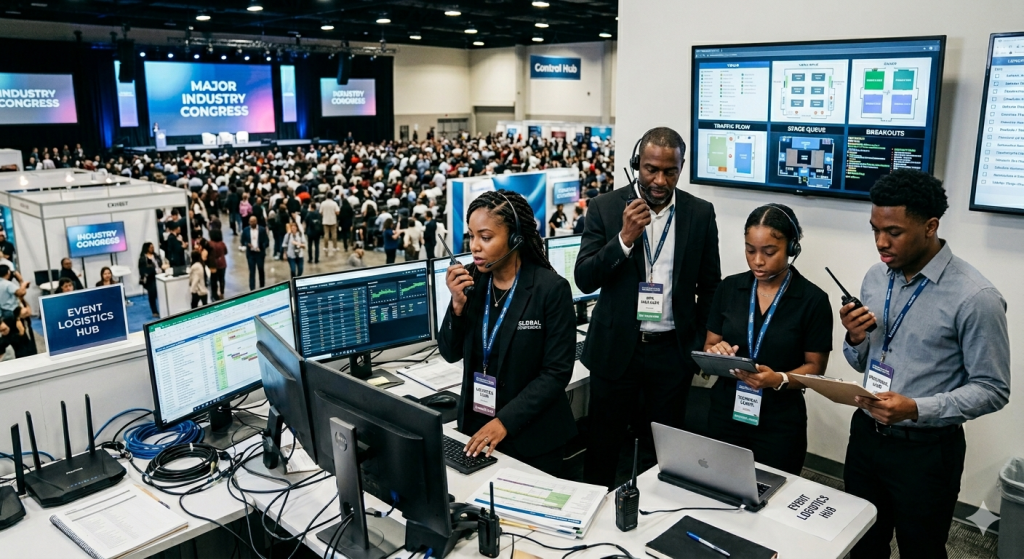
Never assume technical equipment will work without testing. Conduct a complete physical walk-through of the entire venue hours before the event begins.
Test every microphone, display screen, video projector, and audio system to ensure perfect operation. At the same time, inspect walkways to remove trip hazards, and verify that directional signs are placed at every major intersection to guide your attendees.
Communication Systems
Instant communication is vital when addressing live event changes. Walk through the venue ahead of time to verify cellular signal stability in every room, including basements and large concrete exhibition halls.
Provide your core staff with backup two-way radios. If the venue cellular network fails or becomes overloaded by thousands of attendees using their mobile phones, your team can still communicate instantly to solve problems.
Phase 4: Risk Mitigation and Safety Protocols
Health and Safety Frameworks
Crowd safety is your primary responsibility. When gathering thousands of people in one location, you must prepare for medical emergencies. Station certified first-aid personnel and clear medical supplies at well-marked positions across the venue.
Keep every emergency exit route completely clear of equipment, chairs, and temporary display structures. Ensure that exterior exit doors remain unlocked and unobstructed so that emergency vehicles have direct, immediate access to the building if an incident occurs.
Operational Contingency Management
Live events rarely go exactly as planned. Speakers miss flights, local transport networks delay arrival times, and critical equipment fails. Create written, step-by-step contingency plans for these scenarios.
If a keynote speaker cancels, have an alternative presentation or a panel discussion ready to fill the time slot. Additionally, write a clear, standardized policy regarding ticket refunds and cancellation alerts. Having these guidelines ready allows your team to handle disruptions calmly without altering the attendee experience.
Phase 5: Post-Conference Logistics and Breakdown
Vendor Bump-Out Management
The conference does not end when the final presentation finishes. Moving suppliers out of the venue requires active coordination to prevent traffic jams on the loading dock.
Supervise the packing and removal of all audio-visual gear, exhibition booths, and rental furniture. Ensure vendors follow the specific checkout schedule and cleaning guidelines set by the venue. Leaving the space on time protects you from costly overtime fees.
Data Retrieval and Financial Analysis
Logistical data helps you measure your operational success. Use your digital ticketing and registration platforms to export final attendance figures and check-in times.
Review your actual expenses against your initial budget ledger. Calculate your final gross margins by subtracting venue, staff, and supply costs from total ticket sales and sponsorship revenue. Knowing these exact numbers helps you budget more accurately for future events.
Stakeholder Reporting
Maintain communication with your audience and partners immediately after the event. Send automated online surveys to collect feedback from attendees regarding room layouts, registration speed, and presentation quality.
At the same time, email final confirmation notes to your vendors. Close out all remaining invoices, return any rented equipment items, and securely archive your event data for the next planning cycle.
Conclusion
Successful conference execution relies on structured planning, strong vendor control, and active on-site oversight. When you treat every logistical element as a connected system, you remove the guesswork from organizing large events.
Standardized frameworks convert unpredictable event variables into repeatable, successful outcomes. By focusing on detailed site mapping, clear communication channels, and disciplined financial tracking, you protect your budget and ensure a smooth experience for your attendees. Use these steps to turn your next major conference into a highly efficient and professional operation.