
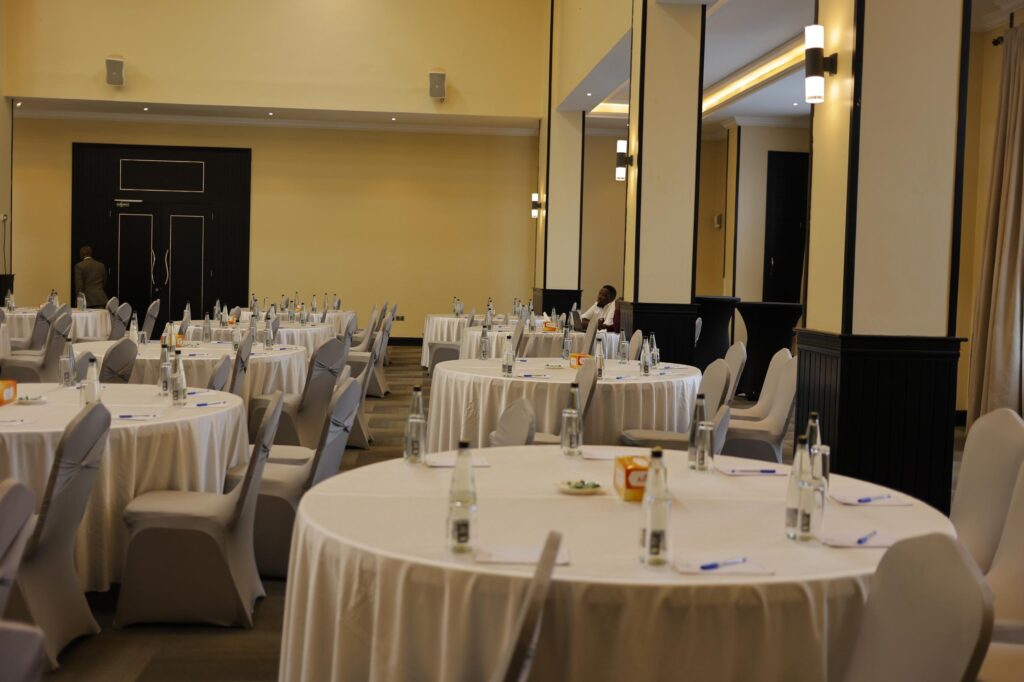
“The venue not only provides a space for your event but also contributes to the overall attendee experience.”
— InEvent, The Ultimate Guide to Venue Sourcing for Event Planners
When planning an event, it is easy to get caught up in the exciting parts—the theme, the décor, the speakers, the entertainment, the guest list and the programme. But before any of those things can come together, one decision quietly shapes almost every part of the event: where it will happen.
A venue is more than a room with chairs. It affects how guests arrive, how they move around, what they see and hear, how comfortable they feel, and how smoothly the event runs. In fact, research cited by InEvent found that 64.6% of attendees say the venue can make or break their overall event experience.
That is why venue sourcing should not begin with simply asking, “Which venue looks good?” It should begin with a more important question:
“What does this event need to work well?”
Whether you are planning a corporate conference in Kampala, a workshop, a networking event, a gala, or an experience outside the city, the right venue supports the event rather than creating problems for it.
- Start With the Event, Not the Venue
One of the easiest mistakes to make is choosing a venue before clearly defining the event.
Imagine you are planning a 300-person workshop. You find a beautiful hotel with a large conference room, and the price fits your budget. It sounds perfect. But then you realise the programme requires several smaller breakout sessions, interactive activities and space for participants to move around. Suddenly, the beautiful room is not such a good fit.
This is why the first stage of venue sourcing is understanding the event itself.
Start by defining its purpose. Is it a conference where people will mainly listen to speakers? Is it a workshop where participants need to interact? Is it a gala that requires a banquet setup? Or is it a networking event where the room needs to encourage people to move around and connect?
Your expected attendance also matters, but it should not be treated as an exact number. It is recommended to allow a 5–10% variation to account for growth or last-minute changes in attendance.
That small buffer can make a big difference. A venue that is just large enough for your expected number may become uncomfortable if a few more people register. On the other hand, choosing a space that is far too large can make an event feel empty and disconnected.
This approach also connects with Ethos’ focus on creating seamless and sustainable events. As highlighted in our guide on 5 Steps to a Seamless and Sustainable Event with Ethos, choosing a venue should begin with understanding the event’s purpose, the audience and the experience you want to create. A venue should not only accommodate your guests but also support their needs while aligning with the overall vision of the event. This is why venue sourcing goes beyond finding an available space—it is about finding a space that fits the purpose, people and experience of your event. (Ethos)
The goal is not to find the biggest venue you can afford. It is to find a venue that fits the experience you are trying to create.
- Look at the Space, Not Just the Capacity
A venue might advertise that it can accommodate 500 people, but that number does not tell you everything you need to know.
Think about what those 500 people will actually be doing.
If everyone is seated theatre-style listening to a keynote, you may need one kind of space. If those same 500 people need tables for a workshop, areas for networking, exhibition booths, catering stations and a stage, you need much more than simply 500 seats.
This is where layout becomes important.
Theatre, banquet and classroom arrangements create very different experiences, and the venue needs to accommodate the specific programme you have planned. The source recommends considering whether the event will include keynotes, breakout sessions, workshops or other activities before selecting the venue.
And this is something you cannot always understand from a website.
A photograph may show you a beautiful ballroom, but it will not tell you whether the stage will block the view of people sitting at the back. It will not show you whether attendees will struggle to move between tables. It may not reveal that the registration area is too small for the expected crowd.
That is why a site visit is so important.
Walk through the venue as if you were an attendee. Where will you enter? Where will you register? Where will you sit? How will you find the washrooms? How will you move to another session? If there is a meal or networking break, where will everyone go?
Pay attention to things that photographs cannot show—particularly acoustics, sightlines and actual foot-traffic patterns. These are reasons planners should not rely only on photos and floor plans.
A good venue should make movements feel natural. Guests should not have to constantly ask where to go or squeeze through spaces that were never designed for the number of people attending.
- Let the Audience Guide You!
Venue sourcing also means thinking carefully about location.
In Kampala, planners have access to a wide range of hotels, conference spaces and other event venues. But the question should not simply be, “What is the most popular venue?”
Ask instead:
“What location makes the most sense for the people attending this event?”
For an event where most attendees live or work in Kampala, a centrally accessible location may be more practical.For example, central Kampala options such as established conference hotels such as Kampala Serena Hotel in the city centre or Sheraton Kampala Hotel in Nakasero can work well for conferences, corporate meetings and professional gatherings where accessibility and convenience are important. Both are recognised among Uganda’s leading conference-hotel options. (World Travel Awards)
But not every event needs to stay within the city centre. For events that involve accommodation, team building or a retreat-style experience, a resort setting may make more sense. Munyonyo Commonwealth Resort, for example, combines accommodation, conference facilities and leisure spaces on the shores of Lake Victoria, making it suited to events where the experience extends beyond the meeting room. (Speke Resort) Similarly, Divine Resort & Spa offers a resort-style setting away from the busy city environment. The point is not that one location is better than the other—it is about matching the venue to the kind of experience you want your attendees to have.
The important thing is to understand that having a venue outside Kampala is not automatically better, just as staying within Kampala is not automatically more convenient. The right choice depends on the audience and the purpose of the event.
Think about the journey your attendees will have to make. If getting to the venue is difficult, expensive or inconvenient, that becomes part of their event experience before they have even entered the room.
- Venue Sourcing Starts on the Ground
At Ethos, we approach venue sourcing as part of the event strategy, not simply as finding a space that looks good on paper. During a recent site visit, our team got on the ground and walked through the venue from the perspective of the guest. We considered the experience from the moment attendees arrive, looking at parking and how easily guests can move from the entrance into the event space.
We also assessed movement within the venue, including how attendees would navigate between different areas, and considered accessibility to ensure the space can accommodate guests with different mobility needs. These details may seem small, but they can significantly shape how comfortable and seamless the attendee experience feels. For us, a site visit is therefore more than checking whether a venue has enough space; it is an opportunity to experience the venue as our guests will and identify potential challenges before event day.
“A venue can have all the facilities an event needs and still be the wrong venue. We look at how the space supports the attendee journey from arrival to departure.”
— Peace Masiko Hasahya, CEO, ETHOS
This is where planners need to think beyond the venue itself. The event experience begins before the attendee walks through the doors.
- Then Look at What the Venue Can Actually Deliver
Once you have found a venue that fits your event size and location, it is time to look underneath the surface.
This is particularly important for events that depend heavily on technology.
A venue telling you that it has Wi-Fi is not enough. If you are expecting hundreds of people to connect to the internet, speakers to present virtually, exhibitors to operate digital displays, or part of the event to be livestreamed, the quality and structure of the connection matter.
Ask what kind of connection the venue has, how much bandwidth is available and whether that connection is shared or dedicated. For hybrid or livestreamed events, it is also worth asking whether the network can be separated for attendees, streaming and exhibitors.
The same thinking should apply to audio-visual equipment and power.
You do not want to discover on event day that the projector cannot support the presentation, the sound system is inadequate for the room, or the available power cannot handle the technical setup.
This is why technical requirements should be discussed before signing the contract, not on the morning of the event.
Ask:
- What kind of internet connection is available?
- How much bandwidth is available?
- Is the connection shared or dedicated?
- Can the network support livestreaming?
- Can separate connections be provided for attendees, exhibitors or production teams?
A venue does not have to have the most sophisticated technology available. It simply needs to have the technology your particular event requires.
- Understand the Real Cost of the Venue
A venue can appear affordable at first and become expensive once everything is added.
The rental fee is only one part of the financial picture. Your actual venue-related budget may include catering, AV, service charges, taxes and other requirements.
This is why it is important to ask for an itemised proposal.
For example, catering deserves more attention than simply asking how much lunch costs per person. Find out what is included in that price and how the final headcount will be calculated.
This matters because venues may require planners to guarantee a certain number of meals before the event. You can end up paying for people who do not attend if you guarantee your entire registration number. InEvent suggests starting with a guarantee slightly below the registered count, with a 5% buffer, rather than automatically guaranteeing every registration.
The same principle applies to other costs.
If the venue charges separately for AV, Wi-Fi, additional setup time or facility fees, those costs need to be considered when comparing venues.
This is why the cheapest venue on paper is not always the cheapest venue in reality.
- Don’t let your search results determine your shortlist.
Venue sourcing has changed.
Search engines are useful, especially when looking for established venues, but they are no longer the only place planners discover options. According to G2’s event industry statistics research, 43.2% of planners find venues through social platforms and community groups, compared with 28.6% who primarily use Google.
That means your sourcing process can extend beyond traditional searches.
Look at planner communities, industry networks and social platforms. Ask other planners about venues they have used. Previous event experiences can reveal things that a venue’s marketing materials will never tell you.
You can also use venue-sourcing platforms to filter venues by capacity, location and technical requirements and compare proposals side by side.
For destination events, Convention and Visitors Bureaus can also be useful because they may have information about venue availability and local incentives before that information becomes publicly available.
The point is not to use every sourcing method available. It is to research widely enough that you are not choosing from the first three venues that appear in your search results.
- Negotiate for Value, Not Just a Lower Price
Finding a venue you like does not mean the conversation is over.
There is usually room to negotiate, but good negotiation is not always about demanding a lower rental price.
Sometimes the better question is:
“What additional value can you offer?”
A venue may be willing to provide complimentary Wi-Fi, allow earlier setup, give you more time for teardown, waive certain facility fees or provide complimentary or upgraded rooms.
These concessions can make a meaningful difference to your overall event budget and operations.
You can also negotiate bundled services. If the venue provides both catering and AV, for example, negotiating the package as a whole may create more value than trying to reduce one individual charge.
The key is to know what matters most to your event.
If early access is important because your production team needs several hours to set up, negotiate that. If reliable Wi-Fi is essential, negotiate it. If accommodation is a major part of the event, look at what can be included in the room package.
Negotiate for what will make your event work better, not just what will make the quotation look cheaper.
Read the fine print, ask the questions early and make sure there are no surprises waiting for you on event day.
Your Venue Site-Visit Checklist
Before committing to a venue, walk through the space with your event programme in mind and ask:
- Does the capacity work for our actual event layout?
- Is the venue accessible to our target audience?
- Is there adequate parking?
- Can guests with different mobility needs navigate the venue comfortably?
- Is the registration area large enough?
- Are the entrances and exits suitable for the expected crowd?
- Does the Wi-Fi support our requirements?
- Is there adequate and reliable power?
- What AV equipment is included?
- What additional technical costs apply?
- How early can our team access the venue?
- How much time is allowed for setup and breakdown?
- What catering options are available?
- How will the final catering headcount be calculated?
- What additional fees should we expect?
- What are the cancellation and postponement terms?
- What are the venue’s sustainability practices?
- Who will be our main venue contact on event day?
The Right Venue Makes Planning Easier
Venue sourcing may begin with finding a physical space, but it is really about finding the right environment for an experience.
In Kampala, there will always be venues that look impressive in photographs, venues that offer attractive prices and venues that are popular because everyone knows them. But popularity, appearance and price alone should not make the decision.
The right venue is the one that fits the event’s purpose, accommodates the audience comfortably, supports the programme, meets the technical requirements and makes financial sense.
And that is why good venue sourcing starts long before the contract is signed.
Define what you need. Research beyond the obvious. Ask the right questions. Visit the space. Negotiate for value. Compare the full picture. Then read the fine print.
When you approach venue sourcing this way, choosing a venue stops being a search for a beautiful place and becomes what it should have been all along: a strategic decision that helps your event succeed.